
Employee Onboarding Automation: Why Manual Processes Have Become Too Costly
When onboarding new employees today, companies pay three times over: with the new hire's time, with the time of experienced colleagues who act as unofficial mentors, and with the time of HR teams who repeatedly trigger the same checklists, forms, and welcome emails manually. In a hiring wave of ten people, this effort multiplies — and yet in many companies it still takes two to three months before a new employee works independently.
The structural cause: onboarding knowledge in most organisations is not systematically captured. It lives in the minds of managers, in scattered shared drives, in procedures passed on verbally. AI cannot invent this knowledge — but it can deliver it in a structured way once it has been properly documented. That is precisely where the leverage lies when companies want to automate employee onboarding.
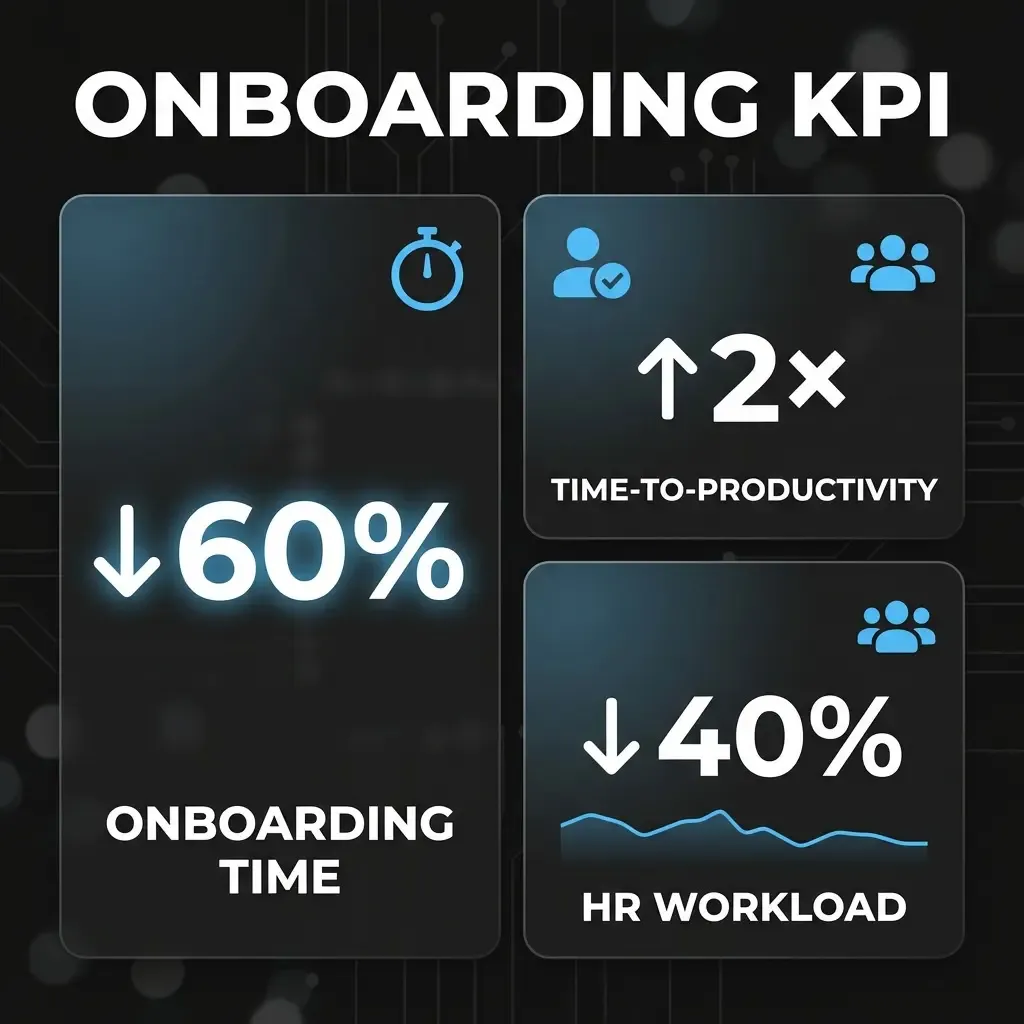
Data from real-world projects shows a consistent pattern: companies that systematise their onboarding with AI-powered workflows reduce average training time by 40 to 60 percent. At the same time, HR teams' support effort per hiring round drops by 30 to 40 percent — not because people are replaced, but because automatable routines no longer need to be executed manually.
What is concretely automatable: sending welcome emails and pre-boarding documents, progressively unlocking system access upon completion of required modules, answering frequently asked questions about daily work life, reminders for outstanding tasks during the onboarding phase, and automatic documentation of progress for HR and managers. What is not automatable: the first personal encounter, cultural introduction to the team, and any form of evaluative feedback — those remain firmly human responsibilities.
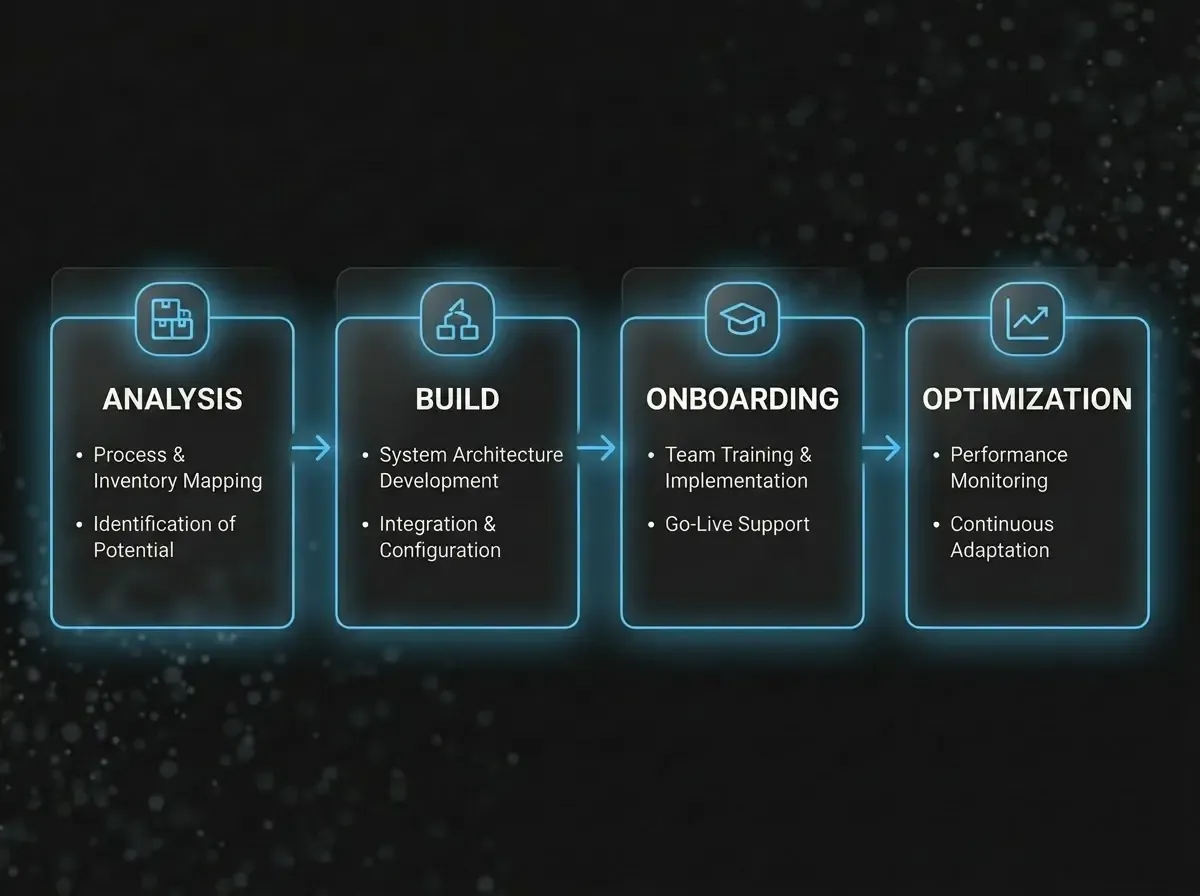
The Four Phases of an AI-Powered Onboarding System
A functional AI onboarding system is not built by purchasing a tool — it is built through a structured four-phase process. In the first phase — analysis — all existing onboarding content is inventoried: handbooks, role descriptions, process guides, FAQ documents. Gaps are identified and prioritised. This sounds straightforward, but in practice it is the most demanding phase, because knowledge is rarely centrally available.
In the second phase — build — content is structured, versioned, and ingested into the AI system. Quality assurance is critical here: outdated or contradictory knowledge must not enter the system. Phase three is the actual onboarding: new employees follow an automated, role-specific path, receive content exactly when it is relevant, and can ask questions at any time — which the system answers based on approved knowledge. Phase four is continuous optimisation: which questions are frequently asked that the system cannot yet answer? What causes drop-offs in the onboarding path? These signals are systematically used to close knowledge gaps.
For mid-market companies, a pragmatic entry point is recommended: do not automate the entire onboarding process at once — start with a single role or department. Once the process has been cleanly built for one position, the system can be extended to additional roles with significantly decreasing effort per implementation. The decisive competitive advantage does not emerge at the first pilot, but when the system functions as institutional memory: knowledge stays within the organisation, even when key people leave.