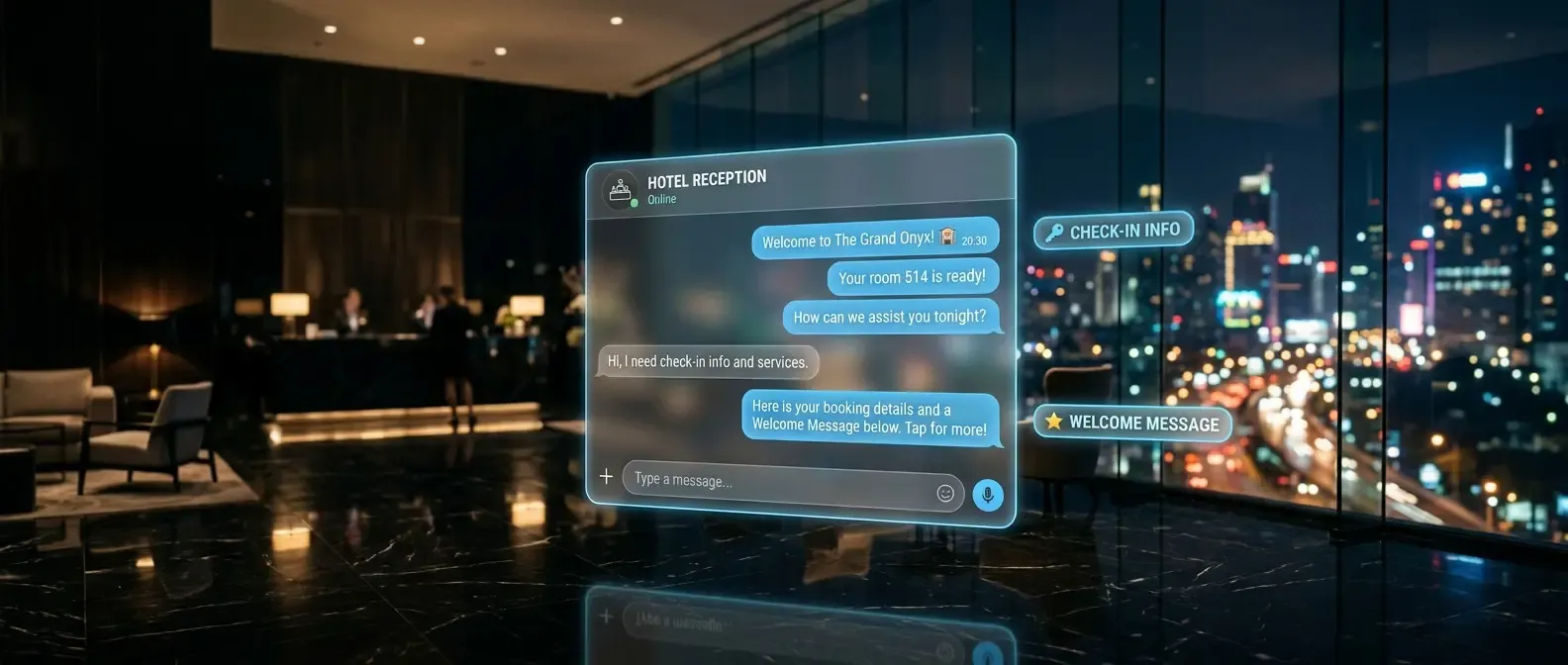
Why guest communication becomes a bottleneck in hotels
A front-desk shift today juggles three to five channels on average: inbound emails from the booking portal, direct WhatsApp messages, phone calls and sometimes Slack-like internal tools. At the same time, staffing shortages in hospitality are structural — not seasonal. Automating AI guest communication in hotels addresses not only convenience but one of the largest operational cost drivers at the front desk.
The core issue is high volume paired with low complexity. Hospitality studies consistently show that over 70% of inbound guest enquiries need the same twenty to thirty answers. Yet each enquiry still costs time and attention — and delays cost star ratings. A guest who asks at 10 p.m. whether breakfast runs until 10 a.m. and only gets an answer the next morning may leave a middling review.
Staff turnover adds pressure: when experienced receptionists leave, tacit knowledge about regular guests, local tips and house routines goes with them. A documented, automated communication system keeps that knowledge permanently — whoever is on shift.
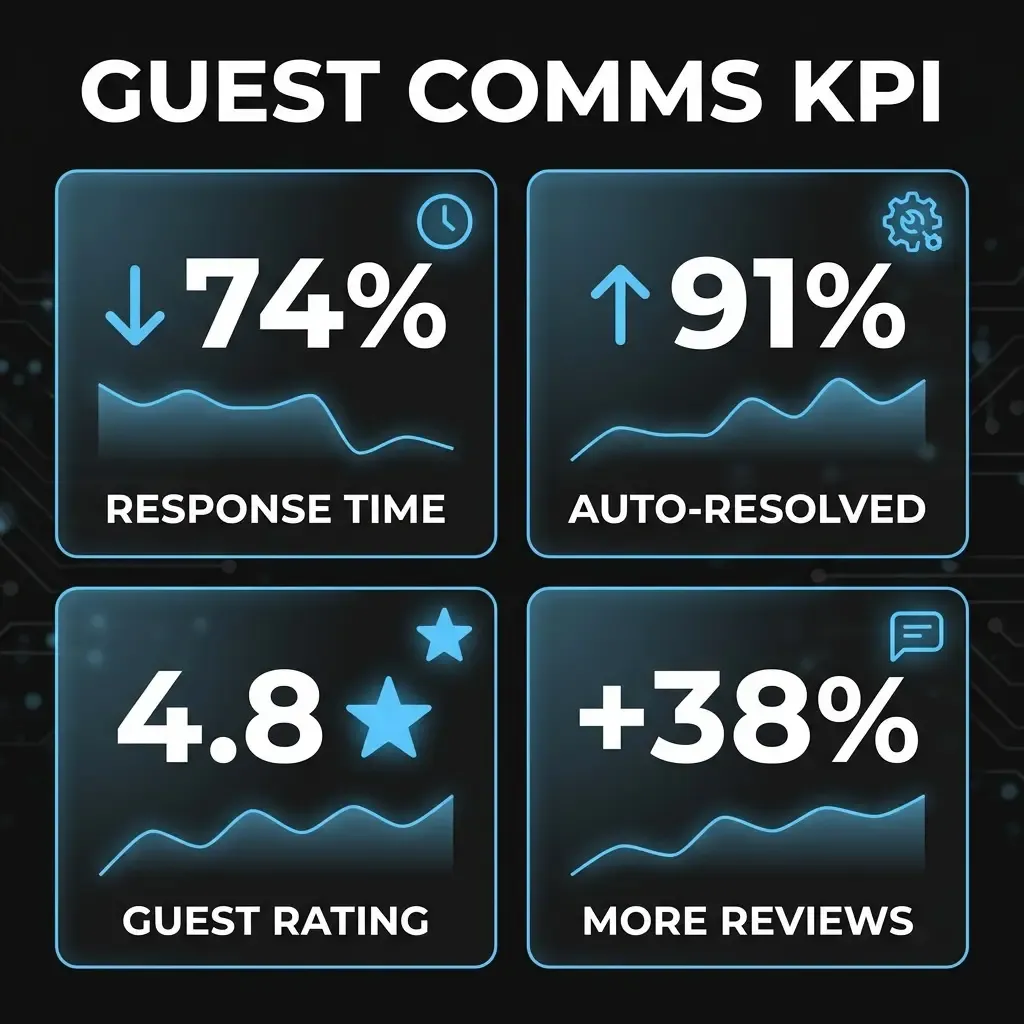
The numbers are clear: operators who have introduced AI communication workflows report not only shorter handling times but noticeably higher staff satisfaction. When the team no longer manually answers WhatsApp messages until 11 p.m., frustration drops — and guests still get instant replies.
Which enquiries automate fastest
Before investing in technology, an honest look at enquiry volume pays off. Most hotel operators underestimate how uniform inbound messages really are. A simple review of the last three months via the OTA or inbox is often enough to identify the top 20 enquiries.
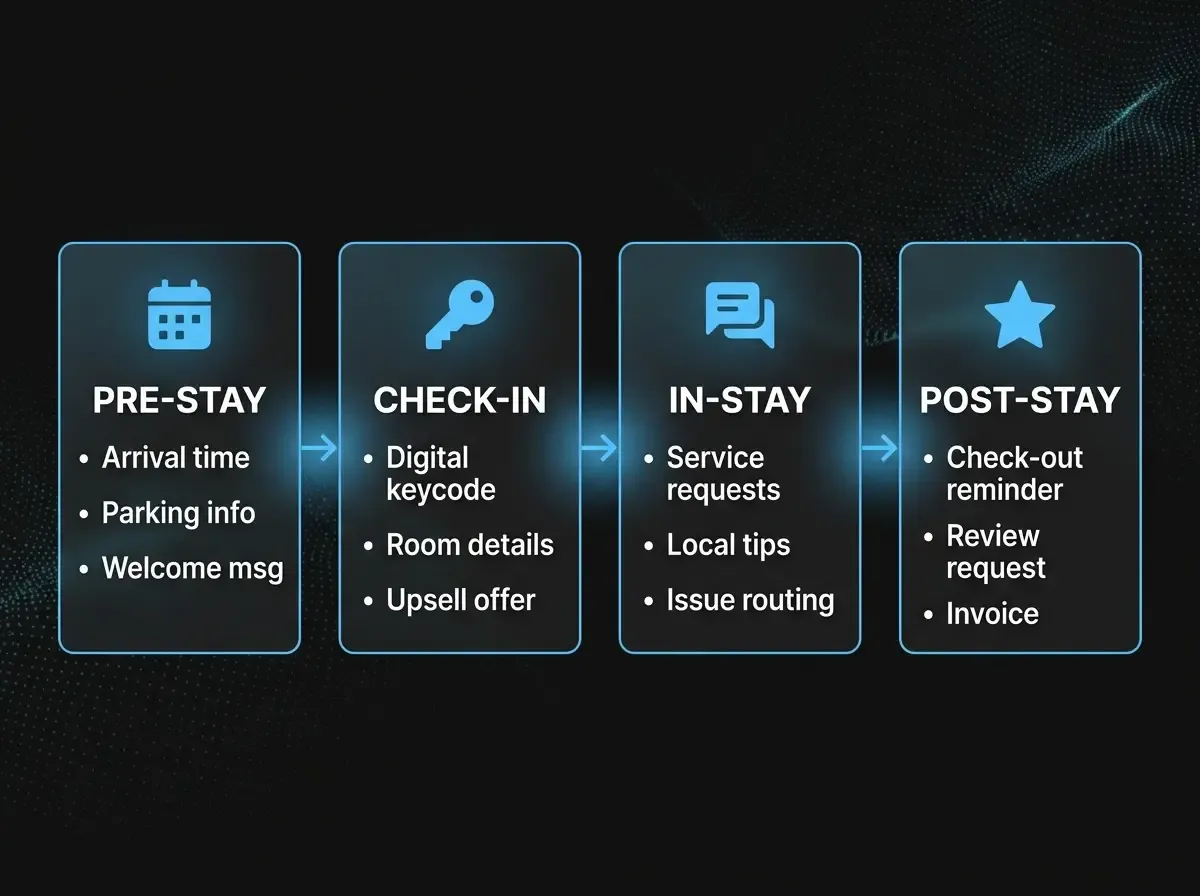
In practice many enquiries cluster into three phases:
- Pre-stay (48–24 hours before arrival): arrival time, parking, early check-in, pet policy, Wi‑Fi password, upsells (room upgrade, breakfast).
- In-stay (during the stay): towels, minibar refill, local restaurant recommendations, taxi booking, housekeeping times, technical questions (TV, air conditioning).
- Post-stay (6–12 hours after departure): invoice questions, lost property, review request, loyalty programme, rebooking offer.
Anything in these clusters that can be solved with a standard answer suits automation. Anything needing discretion, escalation or emotional intelligence — noise complaints, health issues, complex claims — must stay with the human team. The skill is drawing that line, not erasing it.
Automating AI guest communication in hotels: The right setup
The technical build is far more accessible than three years ago. No-code platforms such as Make or n8n let you create a working baseline workflow without coding. If you need more control and deeper PMS integration, lightweight middleware works. In both cases the build follows the same five steps.
Step 1 — Channel audit: Which channels drive the highest volume? Email via the OTA, WhatsApp Business, direct booking site, phone? Only once channels are prioritised does integration make sense. If 80% of enquiries are WhatsApp, start there — not with complex email routing.
Step 2 — Build the FAQ dataset: Automation quality stands or falls on the quality of knowledge you load. Collect the hundred most frequent questions from the last six months and draft a clear, on-brand answer each. This step is editorial, not technology.
Step 3 — Define trigger logic: When should which message send? Pre-arrival prep 48 hours before arrival, review request two hours after checkout. Triggers can be time-based, event-based (e.g. booking confirmation) or intent-based (AI detects the topic of the message).
Step 4 — Set escalation rules: The system must know when to hand off to people. Use a clear keyword list (complaint, unhappy, error, fault) and a sentiment filter that flags negatively worded messages for manual handling.
Step 5 — Integrate review follow-up: The most underestimated lever. Properties that send a personalised message with a direct review link 6–12 hours after checkout systematically achieve higher review rates. Timing is the key — not too early (guest still travelling) and not too late (the memory fades).
This build is not a one-off project — it is a living system that needs regular care. New offers, changed check-in times, seasonal specifics: all must be fed into the FAQ dataset. Operators who understand that and name a clear owner for the system report lasting improvement. Treat it as a pure IT project and neglect it after go-live, and quality drops within months.
The good news: ongoing upkeep is modest. One to two hours a month is enough in most properties to keep the system current. The initial build — FAQ dataset, trigger logic, channel integration — is the real investment. Get that foundation right and you create infrastructure that grows with the operation.