
Why AI agents in property management are making the difference now
Property management teams typically oversee between 80 and 300 units per person. Each unit generates daily data points: fault reports, maintenance deadlines, tenant enquiries, handover dates, protocol requests. Operational pressure is structural — you cannot solve it with headcount alone, because enquiry volume grows with the portfolio. AI agents in property management are the first lever that works in practice without relying on hiring alone.
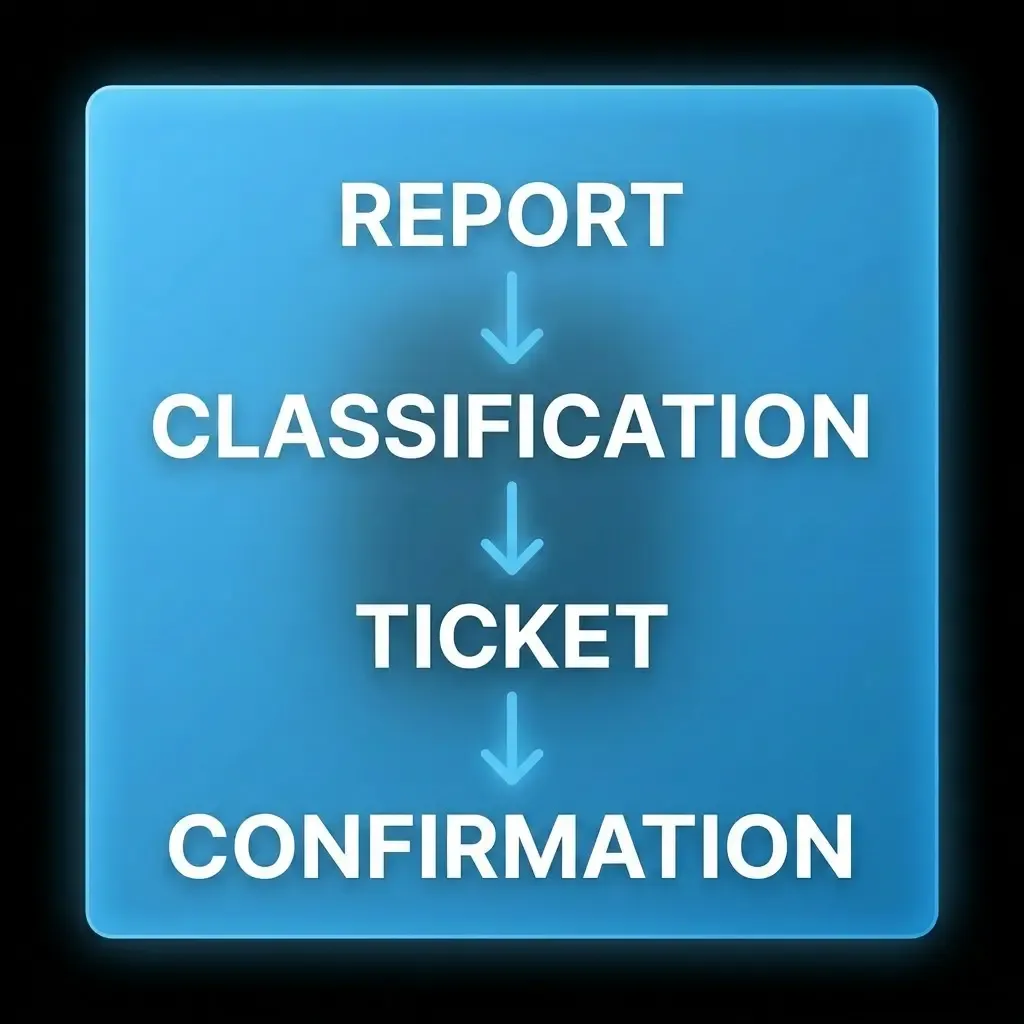
What distinguishes agents from simple automation: they can act in context, chain several steps, and reach into different systems — from the PMS to maintenance tools to your comms platform. An agent that receives a fault report does not only classify it — it opens the ticket, assigns an available contractor, sends confirmation to the reporter, and updates the PMS record — all without manual intermediate steps. What used to mean four actions across three systems becomes one supervised workflow.
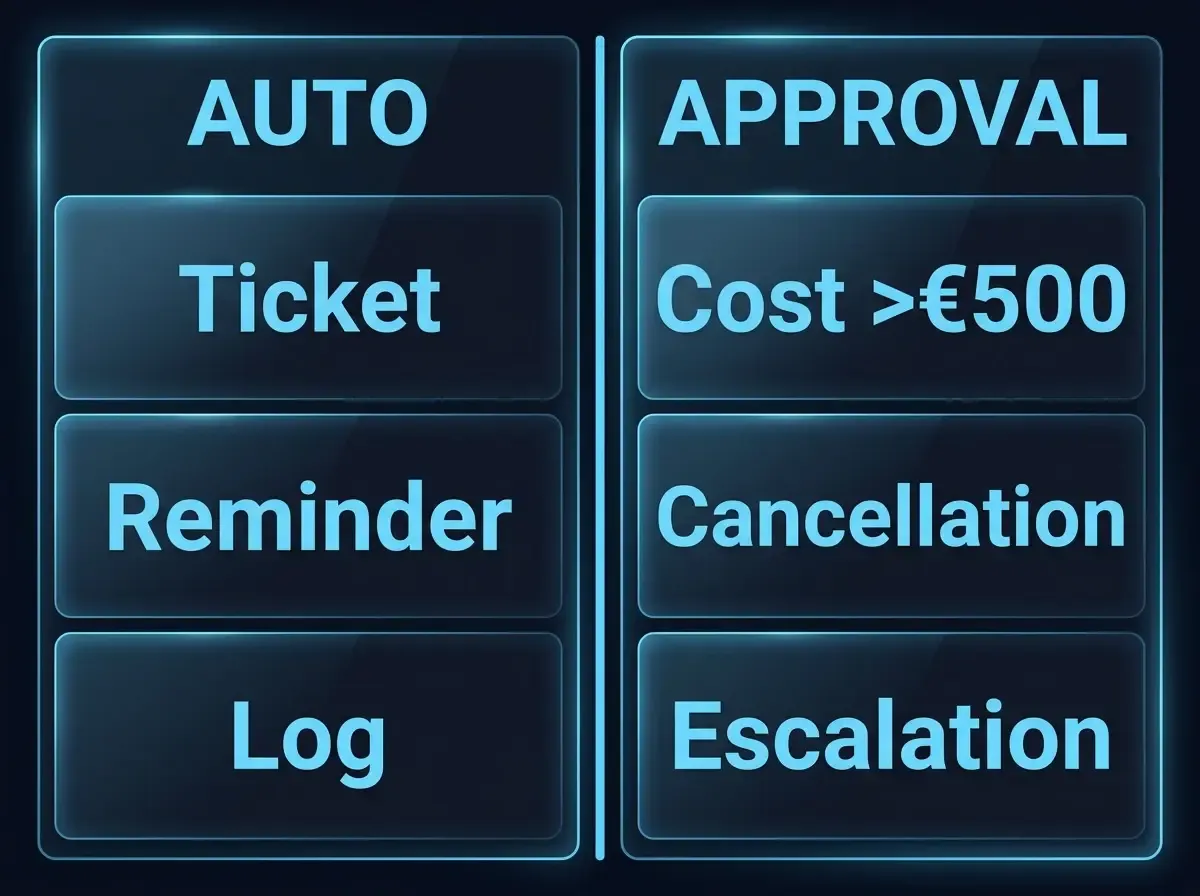
The most common misconception in rollout: agents must decide everything on their own. That is neither necessary nor sensible. An agent that can instruct repairs under €500 independently but requests approval above that threshold is more reliable than a fully autonomous system — because responsibilities stay clear and liability issues do not arise.
Ticketing: from free text to a structured work order
Fault reports rarely arrive in a neat format. One tenant writes “The heating is making odd noises”, another “Window has been sticking since yesterday”, a third reports a leaking pipe via WhatsApp. An AI agent can ingest all three inputs across different channels, normalise them into one ticket format, prioritise by urgency, and assign the right tradesperson or caretaker service — including slot planning against the calendar.
What matters is classification logic: moisture and safety relevance (gas smell, water ingress) must be treated as emergencies and escalated immediately, regardless of time of day or cost cap. Routine maintenance can be batched and coordinated more efficiently. Setting this logic up properly once is the heaviest lift — after that it runs stably.
Documentation: protocols that largely build themselves
Handover and snagging protocols are a well-known bottleneck in property management: they take time, suffer from human inconsistency, and carry legal weight. An agent can help on two levels. First, data capture — structured checklists, pre-filled fields from the PMS (tenant history, last maintenance, open defects), and auto-generated drafts the property manager only reviews and approves. Second, archiving and versioning: the finished protocol is linked to the asset, dated, and sent to owners or tenants where required.
The goal is not to automate protocols end-to-end — legal responsibility stays with people. But average prep time of around 45 minutes per protocol can fall below ten minutes when the agent supplies the structured baseline.
Handovers: coordinating changeovers without losing the thread
A tenant changeover is not a single task but a chain: notice received, schedule condition inspection, coordinate trades for cosmetic repairs, final protocol, deposit settlement, key handover, new-tenant communication. Each step depends on the previous one. If one slips, the whole chain slips — and so does the start of the new tenancy.
An agent system can monitor that chain: set deadlines, remind stakeholders, reflect status changes in the PMS, and escalate actively when something blocks. It does not replace the property manager who decides on site — but it ensures no deadline is missed in day-to-day work and no step is forgotten.
The operational advantage of AI agents in property management is not full automation — it is consistent process orchestration. Teams coordinating 20 to 50 parallel cases daily benefit most: not because the agent does everything, but because it ensures nothing falls between the cracks. That is not a promise for someday — it is implementable today for any portfolio size with a structured PMS data foundation.