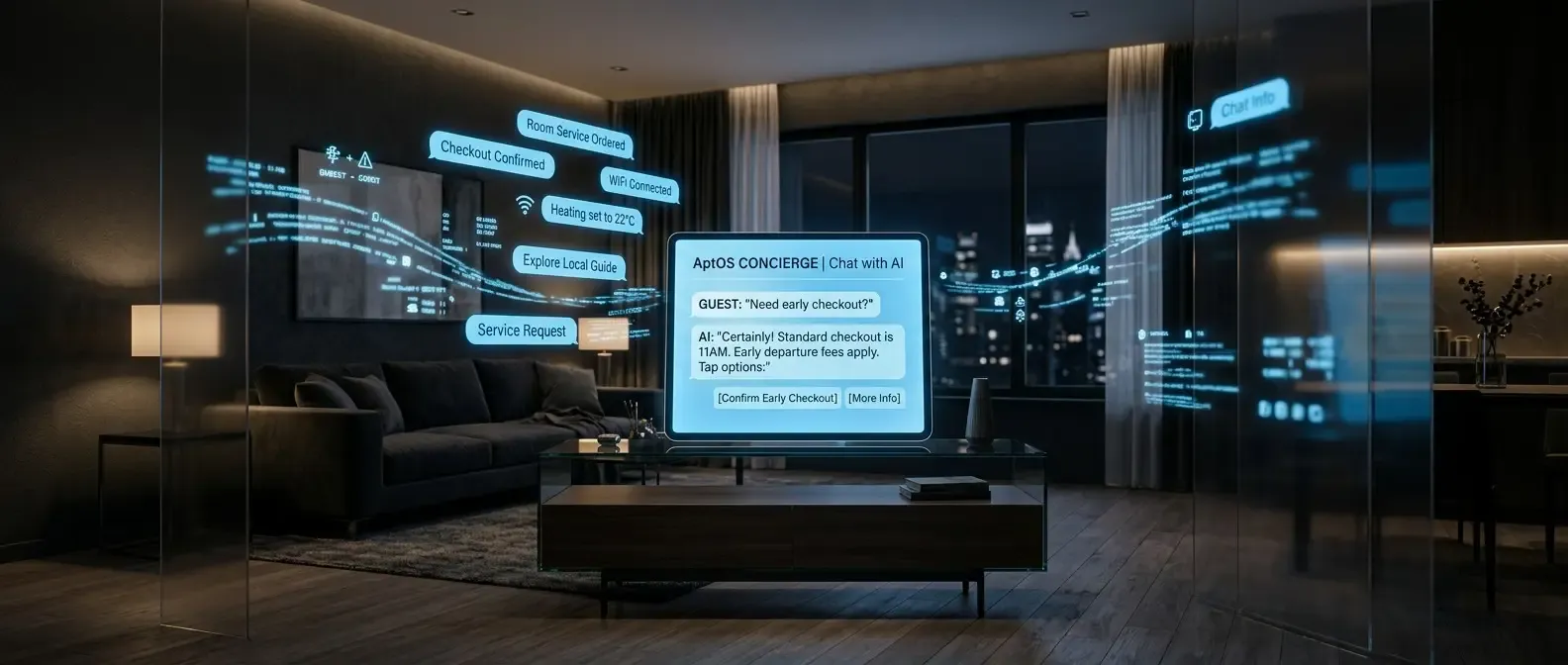
Why AI guest communication works particularly well for serviced apartments
Anyone running several serviced apartments or a larger apartment block knows the pattern: first thing Monday, a dozen messages arrive asking the same three questions. “Where is the key?”, “What is the Wi-Fi password?”, “Is there parking nearby?” The same answers, again and again, often outside normal office hours. That is not a service failure — it is a structural issue.
AI guest communication for serviced apartments addresses exactly that. Unlike hotels with a 24-hour front desk, serviced apartments often lack the headcount for continuous availability. AI closes that gap not with a chatbot and fifteen canned replies, but with a system that understands context, pulls the right information, and sounds consistent — like a well-trained assistant.
What AI can take on in guest communication — and what it cannot
The critical decision when introducing AI guest communication is not which tool you pick, but a clear split of responsibilities. What can the system answer reliably? Where must a human step in? If you do not draw that line explicitly, you risk disappointed guests and reputational damage that outweighs any efficiency gain.
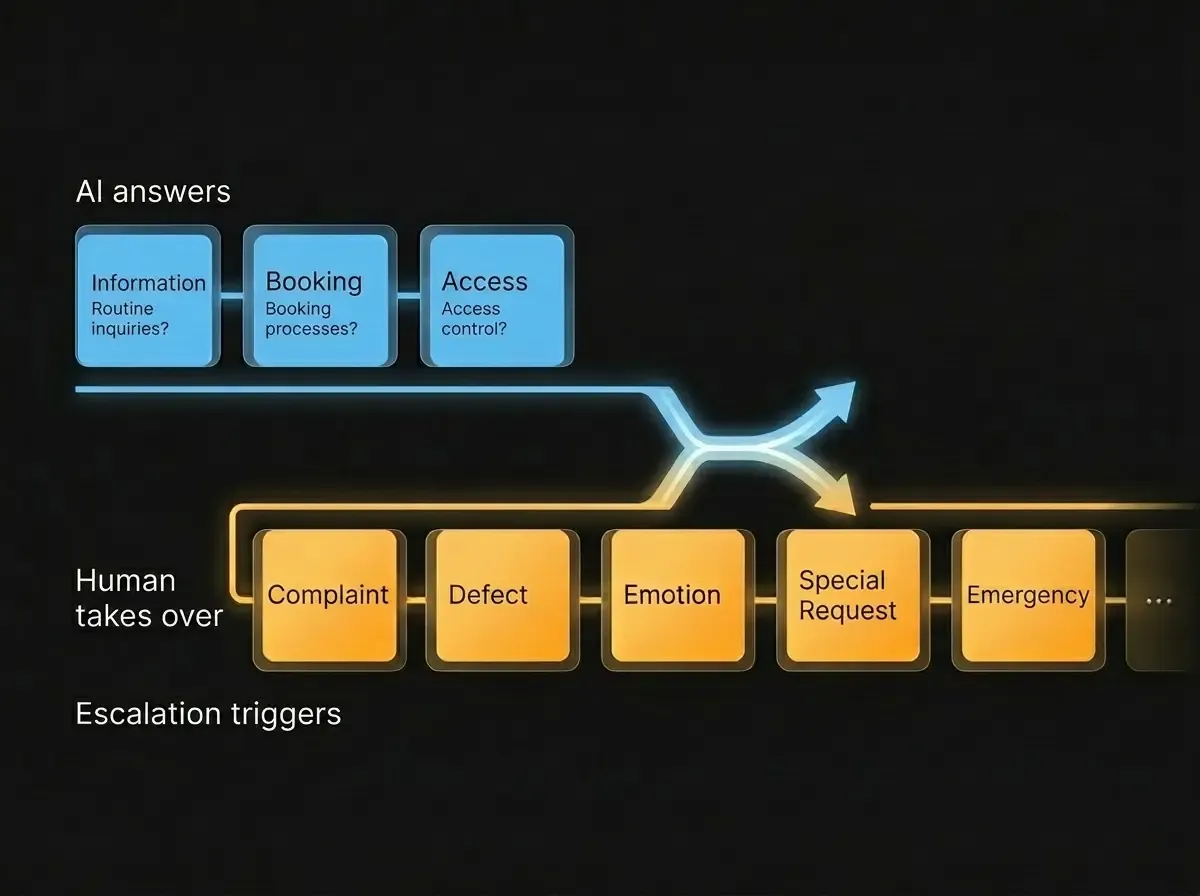
What AI handles reliably
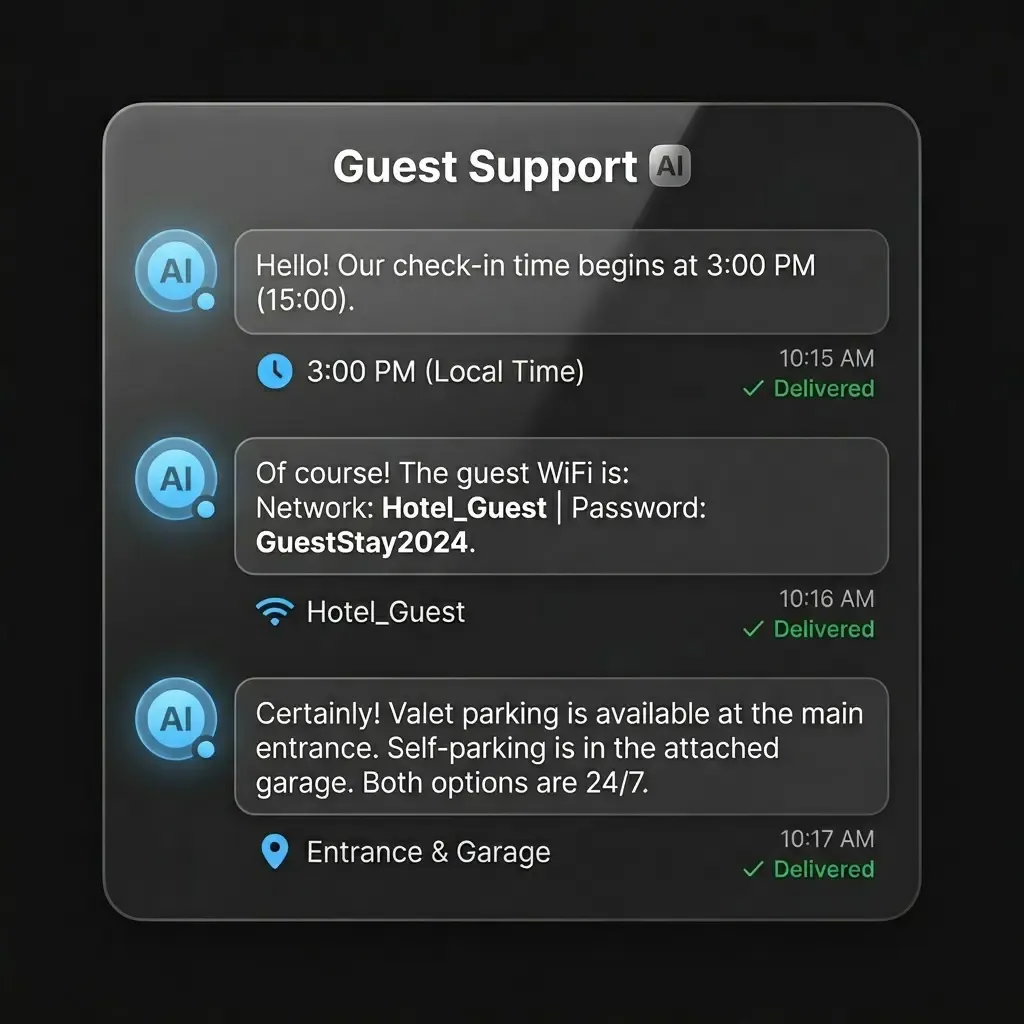
Information requests with known answers are the core of any AI guest communication: check-in and check-out times, self check-in instructions, Wi-Fi credentials, house rules, waste disposal, heating controls, parking, public transport, local restaurant tips. These can be answered in seconds from a well-maintained knowledge base — in multiple languages, around the clock, with consistent quality.
Add booking confirmations, payment reminders, and standard status updates — for example late check-in notices or issuing access codes. Simple rebooking requests within defined rules can also be handled autonomously by a well-configured system.
Where humans remain essential
Complaints about property quality, technical faults, safety issues, and emotionally charged escalations do not belong in a fully automated flow. Here, response speed matters less than empathy and judgement in the moment. The same applies to exceptional requests — guests with specific needs, groups with complex wishes, situations with legal implications. The system must recognise these cases and hand off to a real person immediately, not after three rounds of back-and-forth.
Escalation: the critical piece that is often missing
The most common problem with AI guest communication is not what the system answers wrongly — it is what it fails to escalate. A guest whose heating is broken messages at 11 p.m. The system replies with generic guidance on the heating controls. The guest says they have already tried that. The system sends the same information again. By the third round the guest is understandably angry — not about the faulty heating, but about going in circles with a machine.
A working escalation protocol recognises that moment. Triggers can include: repeated questions on the same topic, explicit dissatisfaction (“that does not help”), requests outside the defined knowledge scope, or keywords such as “broken”, “cold”, “dangerous”, or “emergency”. As soon as one of these patterns appears, a human takes over — actively, with the full conversation history.
Three steps to live AI guest communication
Building AI-assisted guest communication for serviced apartments does not have to be a multi-month programme. With the right scope, a first working pilot can go live in a matter of weeks:
- Step 1 — Build the knowledge base: Capture every frequently asked question and its answer in a structured document. That is the foundation the system draws on. Quality here directly drives the quality of AI replies.
- Step 2 — Define the escalation path: Before go-live, it must be clear who is notified for which trigger, through which channel, and within which timeframe. Without that path, any AI guest communication setup is incomplete.
- Step 3 — Run a pilot on one property: Do not switch your entire portfolio at once — use one site as a test bed. Tune tone, escalation logic, and knowledge gaps there — then roll out.
AI guest communication is not about cutting service — it is about reallocating capacity. Automate routine questions reliably, and you free time for the interactions where a personal touch truly matters.